
On the downside, once a child support order is put in place and once it is signed by a judge, that is your official number. The only way to change it, up or down, is to seek what is called a modification of child support.
I want to be blunt about what that means for you, because people get this wrong in a way that costs them real money. Nothing recalculates itself, not when you lose a job, not when you get hurt, and not when the other parent doubles their income. The order sits there and stays true until somebody files something.
This chapter is about the three ways people try to move that number. When circumstances genuinely change, when a parent arranges for them to appear to change, and when two parents try to agree the number away between themselves. Maryland handles all three differently, and only one of them goes the way people expect.
What it takes to get a number reopened
Either party can seek a modification at any time, but only if there is what is called a significant or material change in circumstances. That standard is the same one custody uses, and it is the gate everything else in this chapter sits behind.
So how much change is enough? There is some case law, but there is no official rule. What I can tell you is what I see judges do. I would say on average they would require roughly a 20% increase or decrease as what would be appropriate for a modification.
Take that as a working benchmark and not a line in a statute, because it is not one. The court has the right to look at it even if it is a small up or down, because it is always in the best interest of the child. So a smaller change is not hopeless, it is simply not automatic.
What qualifies in practice is concrete. Someone gets fired from their job, or gets injured at work, or is required to move to a job that has a different location and a different pay. Any of those are reasons for the court to modify. Being unhappy with the arrangement is not one of them.
Then there is a timing trap in the statute that I want you to see before it costs you anything. Under Md. Code, Family Law § 12-104, a court may not retroactively modify a child support award to a date earlier than when the modification motion was actually filed. Lose a job in January but don't file for a modification until June and you have no way to recover the difference for those five months, no matter how legitimate the drop in income was.
Read that twice if you are the one whose income just fell. Waiting to see whether things turn around is the most natural thing in the world, and every month you wait is a month you cannot get back. The statute also names one specific event as its own material change: a party's incarceration, where it has sufficiently reduced their ability to pay support, counts on its own.
One more piece of this catches people from the other direction. Both parents carry their own separate obligation to act. If a parent stops paying the full amount because their income genuinely dropped, the parent who is owed support can seek contempt for what was not paid. And the person who lost the job or got hurt has to also file for a modification. Losing the job does not excuse the arrears. Filing does.
Voluntary impoverishment, or the pay cut that arrives at a convenient time
Now the other pattern, and if you are the parent owed the money, it is the one you should know by name.
The way it happens most of the time is this. Sometime after the litigation starts, so after someone is served with a request for child support, all of a sudden they lose their job, or all of a sudden they have an injury.
Voluntary impoverishment means that someone has intentionally taken an action in regard to their income that is directed significantly for the purpose of lowering that money. The key word is intentionally. To get a court to find it, you have to prove that person intentionally lost the job, intentionally got hurt, or intentionally moved, strictly for the purpose of reducing their income.
It is also difficult to prove, and I am not going to tell you otherwise.
But the only way to prove voluntary impoverishment is to convince the court by what's called the preponderance of the evidence, which is basically 51%, that a person has taken an action to intentionally reduce their income so that they in turn reduce child support.
Fifty-one percent. More likely than not. That is a lower bar than the one people imagine from television, and it does not require a confession.
You can show it circumstantially, which means without the party making an admission. Circumstantial evidence, meaning all the paperwork you can get about their tax returns and their business records and all those things, can prove it. Unless they have a justifiable excuse for the change in their income, it would be considered voluntary impoverishment.
And here is what a finding actually does, because this is the part that has teeth. It allows the court to set support on potential income, meaning the income the court finds that parent could be earning, rather than the figure now being reported. So if someone is making 100 and all of a sudden they are making 40, and the court believes that they voluntarily impoverished themselves, the judge can say: "I understand you're making 50, but I don't believe that this happened above board, so I'm gonna set the guidelines at 100."
The order gets calculated off the original figure, not the one now being reported. Doubling the income back up is a significant number, and if the court got it wrong about you, it lands on someone who is genuinely earning less.
So take both sides of that seriously. If you legitimately lost the job or legitimately got hurt, you have nothing to fear from this test, and the paperwork will show it. If you are timing a pay cut around a support filing, understand that circumstantial evidence and timing alone can carry a fifty-one percent burden.
Maryland courts apply a specific test, drawn from cases including Malin v. Mininberg, 153 Md. App. 358 (2003), when a party's income drops suspiciously close to a support proceeding.
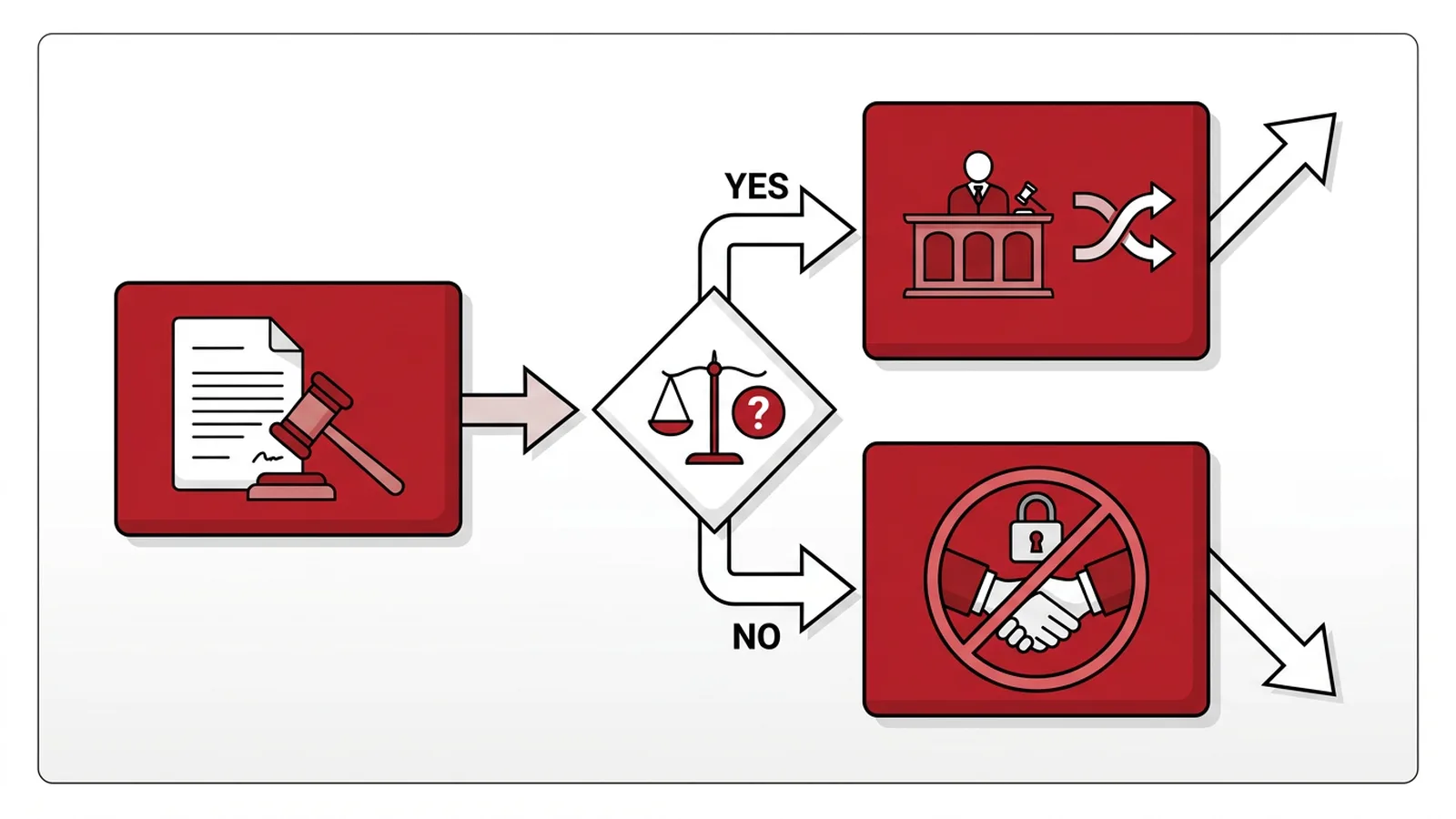
You cannot agree the number away
The third route people try is the one that feels most reasonable, and it is the one that does not work.
Deviation from the guidelines has become increasingly difficult. There is a case in Maryland now, and if anyone is interested, the name of the case is Houser. What that case says is that a parent does not have the right to waive child support on behalf of a child.
So even if the parents agree, and that is a big thing today, it does not settle it. The support belongs to your child, not to the two of you, which means it is not yours to trade for something else you want out of the settlement.
I had a case that ran right up against the edge of that rule. My client agreed to a reduction in child support, but that was only because his now ex-wife was going to be traveling back and forth between here and Fort Gordon, Georgia, to see the children. The court accepted that deviation, which means a number was established, but there was a reason why the court agreed that that number was too significant.
Look at why it worked, because it was not because both parents wanted it. As I put it: "the only way to do a deviation is to prove to the court that it's in the best interest of the child for that deviation to occur, and that really can't be based on the parents. It can only be based on what's in the best interest of the children."
His ex-wife's travel costs were the children's access to their mother. That is a children's-interest argument that happens to also be a parent's-cost argument. If it had only been the second one, the court would not have taken it.
In Houser v. Houser, 262 Md. App. 473 (2024), affirmed by the Supreme Court of Maryland in 2025 as In re Marriage of Houser, Maryland's courts held that child support is a right belonging to the child.
Common questions
How much does income have to change before Maryland will modify child support?
There is some case law but no official rule. I would say on average judges require roughly a 20% increase or decrease as what would be appropriate. Treat that as a benchmark, not a line, because the court has the right to look at a smaller change too, since it is always in the best interest of the child.
What is voluntary impoverishment in a Maryland child support case?
It means someone intentionally took an action regarding their income directed at lowering that money. You have to prove intent by a preponderance of the evidence, basically 51%, though you can do it circumstantially through tax returns and business records. If the court finds it, it sets the guidelines on potential income, which means the old figure rather than the new one.
Can Maryland parents agree to waive child support between themselves?
No. A parent does not have the right to waive child support on behalf of a child, so even where both parents agree, that agreement does not settle it. Any deviation has to be proven to be in the best interest of the child. It cannot be based on the parents, only on what is in the best interest of the children.
If I lose my job, does my support order drop automatically?
No, and this is where people lose money. Nothing recalculates on its own. A court cannot modify your award back to a date earlier than the day your motion was filed, so every month you wait is a month you cannot recover. Meanwhile the parent owed support can pursue contempt for whatever went unpaid.
Chapter reflection
Three doors, and only one of them opens the way people assume. A real change in circumstances gets you in, if you file promptly. A manufactured change gets you a judge who calculates your support off the income you used to have. And a private agreement between two parents does not get you in at all, because the right belongs to the child.
Every one of those rules exists because Maryland courts worked out, case by case, that families need flexibility and children need a floor.
Which leaves one question this book has not answered, and it turns out to be the one that quietly decides how well every rule in the previous eleven chapters works for you. Not what the law says. Who is standing next to you when it gets applied. A modification fight already underway is a different document from a chapter read in advance, and the deeper version lives at Glen Burnie custody modification page and Columbia custody modification page.