
Here is an assumption that trips up first-time filers in both Anne Arundel and Howard County, and it is a completely reasonable one to make. People assume the courthouse closest to them, or the one in their own town, handles their divorce. It does not.
Maryland puts all divorce, custody, and family property jurisdiction in one court per county. One. If you live in Glen Burnie, that court is not in Glen Burnie. If you live in Columbia, it is not in Columbia. Knowing which building your case belongs in is the first mechanical step in filing correctly, and getting it wrong costs you time you will not get back.
So let me give you both addresses, and then the thing that happens the moment you file.
Anne Arundel County, and why the Glen Burnie courthouse is the wrong one
The first thing is that it is important for people who live in Glen Burnie to know that the court which deals with child support, and with family law generally, is called the circuit court.
Now, the confusion here is understandable rather than careless, because there genuinely is a courthouse in Glen Burnie. There is a district court right here in Glen Burnie. People drive past it, and they reasonably assume that is where this happens.
A District Court and a Circuit Court are two different courts under Maryland's system, and the district-level court carries no family law jurisdiction at all. Family cases from Glen Burnie and everywhere else in Anne Arundel County file at the Circuit Court for Anne Arundel County, at 8 Church Circle in Annapolis, Maryland 21401.
I want to be precise about why that one building matters. Anne Arundel County Circuit Court is the only place where divorce and custody decisions can occur that are on a more permanent basis, meaning something other than the temporary relief you might get from a protective order somewhere else. A protective order can move fast and it can change where a child sleeps tonight. It is not a custody decision. The permanent decision comes out of Annapolis.
There is only one court in Maryland that does family law work, meaning specifically custody, divorce, property, counsel fees, and that's the circuit court for Howard County, that is located in Ellicott City. And for listeners out there who need the address, it is 9250 Judicial Way, Ellicott City, Maryland 21043.
Howard County, and the same rule with a different address
Columbia has its own everything. It does not have its own family court.
Howard County family cases route to the Circuit Court for Howard County in Ellicott City, at 9250 Judicial Way, Ellicott City, Maryland 21043. Same structure as Anne Arundel, same principle. One court in the county does custody, divorce, property and counsel fees, and that is the one your case goes to no matter which village you live in.
These are the two courthouses I spend most of my working life in. That is not a small detail for a Columbia or Glen Burnie family, and I will come back to it in the last chapter of this book, because who stands up in a building matters more than people expect.
Filing it yourself, and the twenty-page problem
Neither courthouse has a simplified track for someone without a lawyer. The paperwork is the paperwork.
There used to be a time when people would come in to meet me and I would sit with them at a conference table and say, tell me what you want for physical custody, tell me what you want for legal custody. I would write down my notes, and then we would ask for that when we filed. That was the whole intake.
That has changed. Now people come in with "a 20-page ChatGPT chart that tells you tons and tons of information that has no relevance to what we're trying to accomplish here." Twenty pages. And the person holding it believes, understandably, that they have done the work.
The gap I want you to see is between having a document and understanding what a Maryland circuit court judge is being asked to decide. Those are not the same thing, and the second one is what actually moves your case. A generated chart does not know which county you are in, which judge is sitting, what the court already ordered last year, or which of your twenty pages is the one that matters. I see that gap turn into months, and it is one of the more avoidable reasons a case runs long.
The clock that starts the second you file
Filing in the right building only starts this. Once a complaint for divorce or custody is filed, Maryland law puts a hard deadline on what happens next, and it is one of the most consequential procedural facts a person can miss.
Here are the mechanics and the stakes together: "that complaint has to be served within 60 days, along with a summons to the party that's getting served, which says that they have 30 days to respond to any service, or they will be held in what's called default."
Sixty days to serve. Thirty days to answer. Miss the second one and you are in default, and default is not a technicality. "The side that filed originally and did not receive a response pretty much gets whatever they want."
Read that plainly, because it is the part that should make you act. If you have been served and you decide to wait, on the theory that nothing happens until there is a hearing date on a calendar, you are handing the other side the outcome they asked for. No judge weighs your position against theirs, because you never put one on the record. There is nothing to weigh.
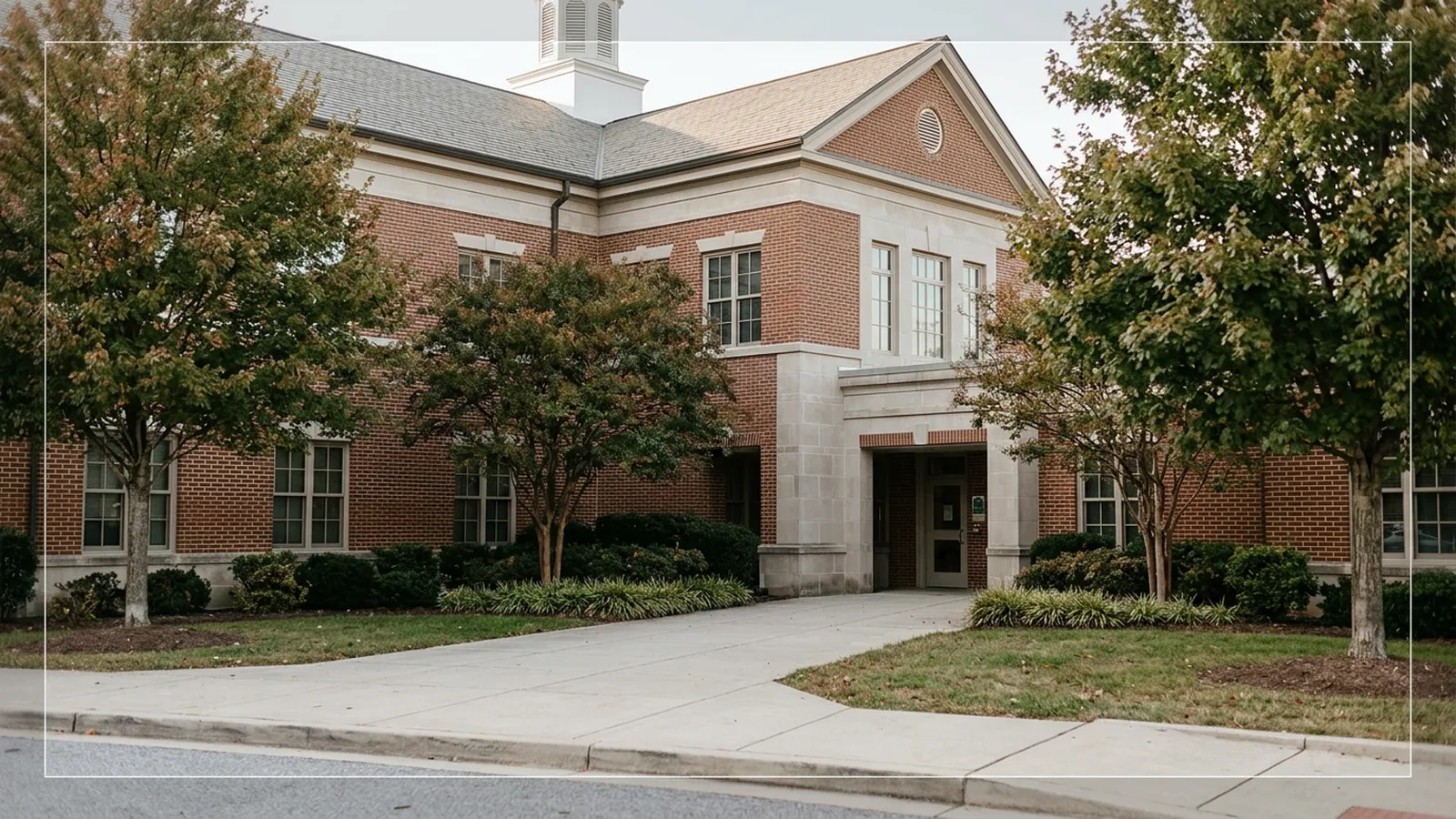
You are probably not done with this courthouse
A large share of the cases that come through my office in a year are not new filings. They are returning families.
The reason is jurisdiction. The court holds jurisdiction over children until they are 18 years old, and for child support until 19 under certain circumstances. As I put it, "the court retains jurisdiction for a long, long time." The decree does not close the file. It sets terms the same court can revisit for as long as your child is covered by it.
So if you move out of state, remarry, or need to change a custody or support order years from now, expect to file that request in the same Anne Arundel or Howard County courthouse that handled the original case. You do not start over somewhere new.
And when you come back, bring the paper. The best thing you can do if you are coming in for a modification or a change or because you are moving to another state is bring the existing orders and any pleadings you have to me or my office. Beyond that, bring as much information as you can about your employment, your finances, your taxes and your assets. That is pretty much what we need to tell you where you stand, and the visit goes very differently when you have it with you.
Common questions
What courthouse handles a Glen Burnie divorce?
The Circuit Court for Anne Arundel County, at 8 Church Circle in Annapolis. It is the only court with jurisdiction over divorce, custody and family property matters in Anne Arundel County. The district court in Glen Burnie itself is a different court and does not handle family law, which is the mix-up I see most often from that side of the county.
What courthouse handles a Columbia divorce?
The Circuit Court for Howard County, at 9250 Judicial Way in Ellicott City. It is the only court in Maryland that does family law work for Howard County, meaning custody, divorce, property and counsel fees, so every Columbia family files there regardless of which village they live in. Nothing about a Columbia address changes that.
Is there a family law court in Glen Burnie or Columbia themselves?
No. Both sit inside counties whose family law jurisdiction is centralized in a single circuit court, in Annapolis for Anne Arundel County and in Ellicott City for Howard County. Glen Burnie does have a district court of its own, which is the source of most of the confusion, but it carries no family law jurisdiction at all.
What happens if I do not respond after being served with a Maryland divorce complaint?
You have 30 days from service to answer, or you can be held in default. The consequence is blunt: the side that filed and got no response pretty much gets whatever they want, because there is no opposing position on the record for a judge to weigh against it. Waiting for a hearing date is not a strategy.
What should I bring if I am coming back to modify an existing order?
Bring the existing orders and any pleadings you already have, and then as much as you can gather about your employment, your finances, your taxes and your assets. Those are pretty much the things we need, and having them in hand is the difference between an answer that day and a second appointment.
Chapter reflection
The address is the easy part of this chapter. The part worth carrying forward is what starts moving the moment your paperwork crosses that counter.
Sixty days to serve, thirty days to answer, and a court that will keep this file open for as long as your child is a child. Filing is not the end of a decision. It is the beginning of a schedule that runs whether or not anyone is paying attention to it.
Which raises the question that catches most families next. A contested case can run a year, and your rent, your child's school week and your bills do not pause while it does. Maryland has a tool for exactly that gap, and it has a Latin name that hides how practical it is.